



Home
Biography
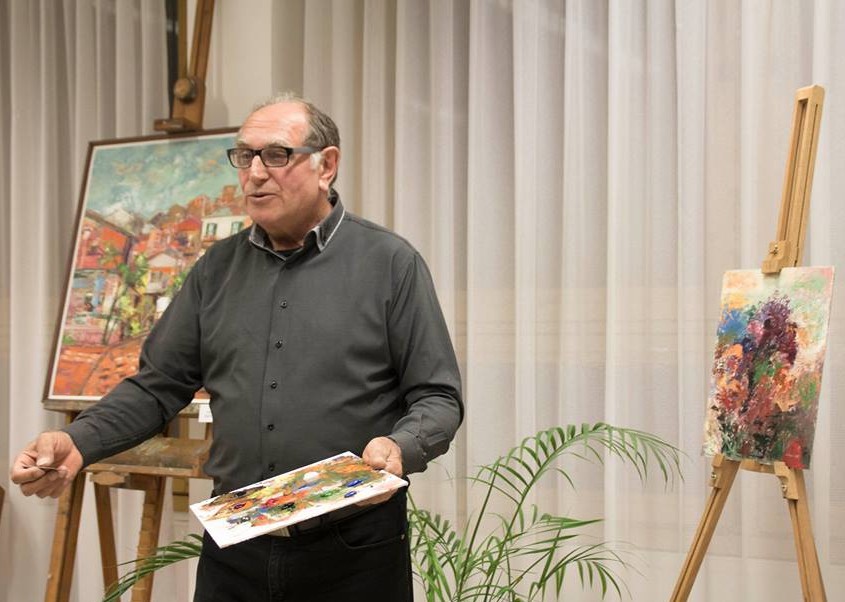
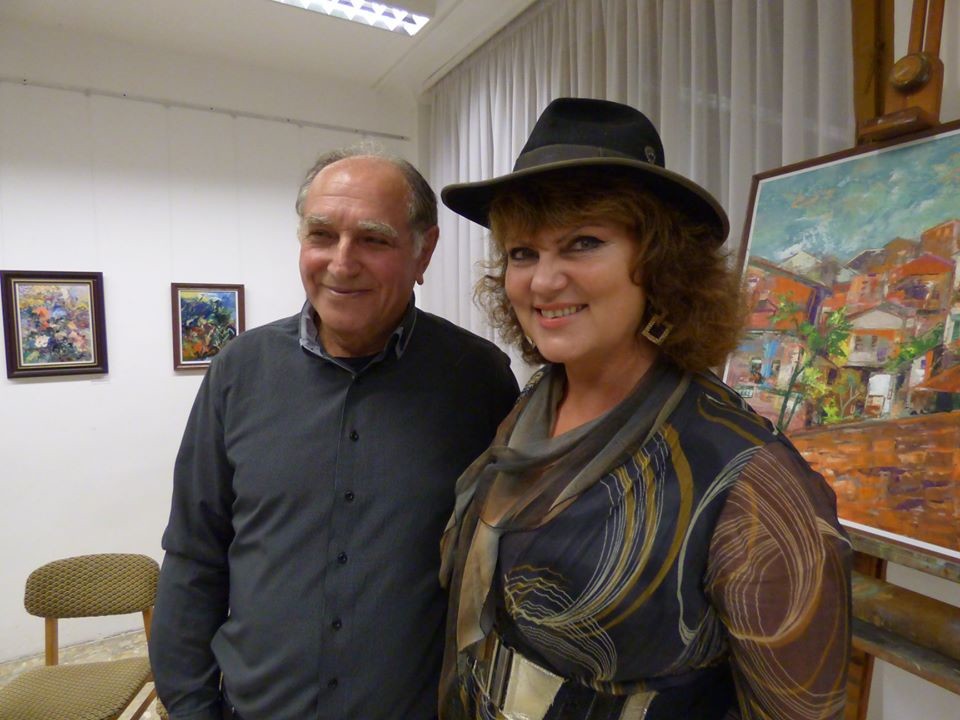
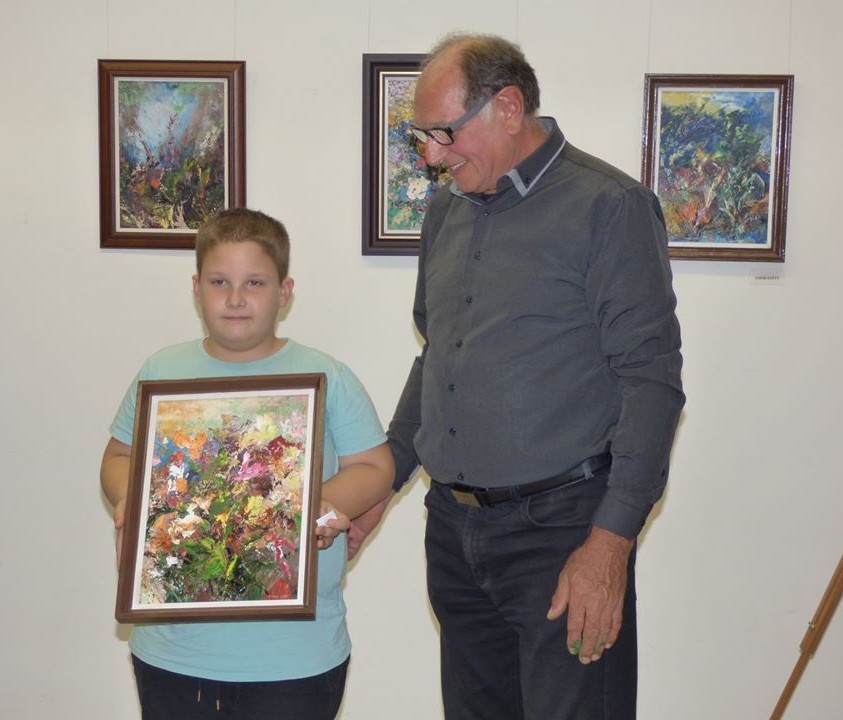
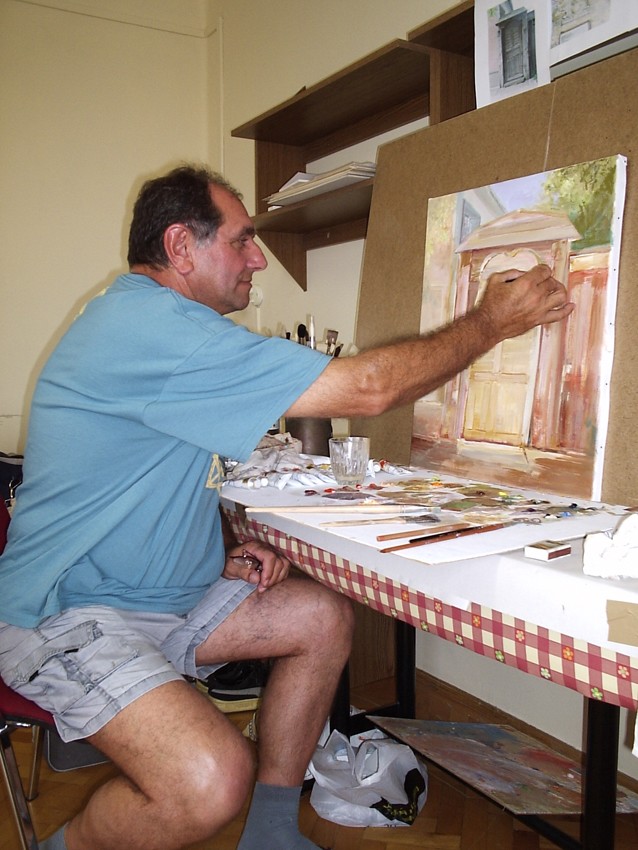
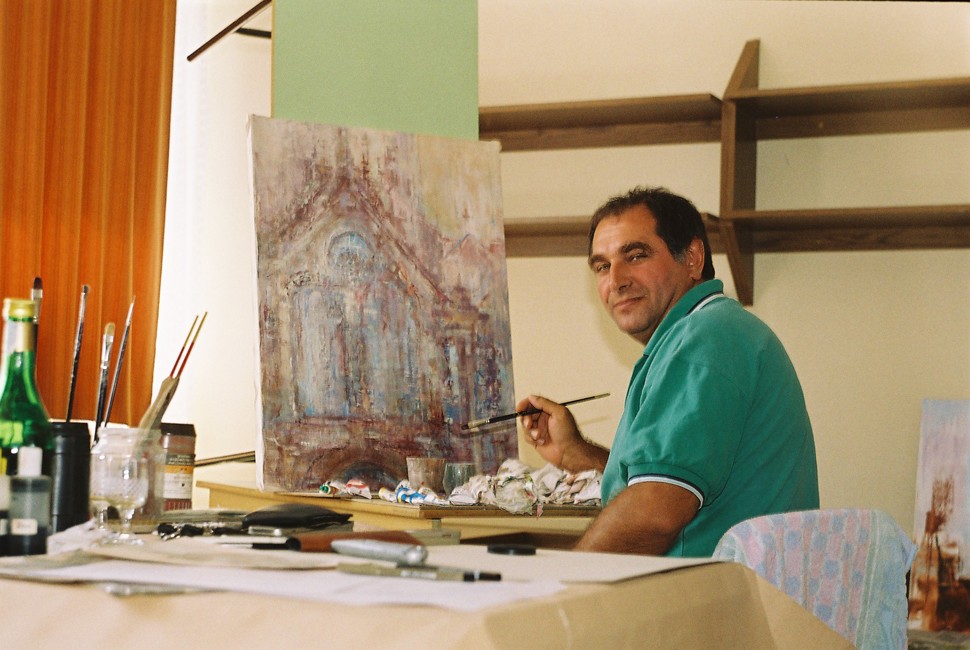
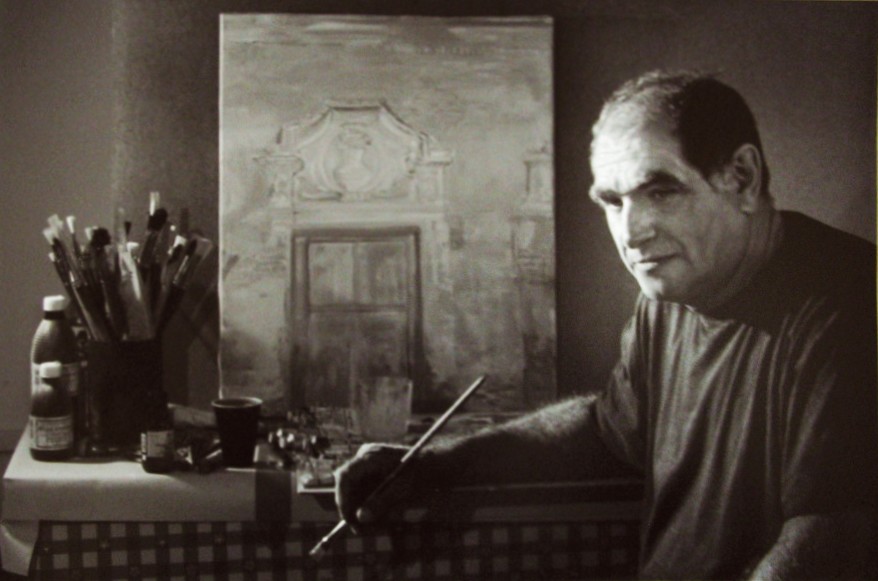
István Orosz was born on 27 September 1953 in Bököny. But it is Nyírbogdány he considers as his native village. It is here that the painter grew up, did his primary studies and in mark of deference, he put the initial "B." (Bogdányi = of Bogdány) in front of his last name: István B. Orosz. During his secondary studies, the painter lived in Nyíregyháza and Debrecen: two big cities in the east of Hungary.
In 1969, the young István Orosz won second prize in Szabolcs - Szatmár County Artistic Competition. Between 1969 and 1972, he took courses of deepening in the "Studio" of András Beretz.
His meeting with László Félegyházi in Debrecen was decisive in his career. In the evolution of his art and style, the friendship and advice of the painter Gábor Lukács were also of crucial importance.
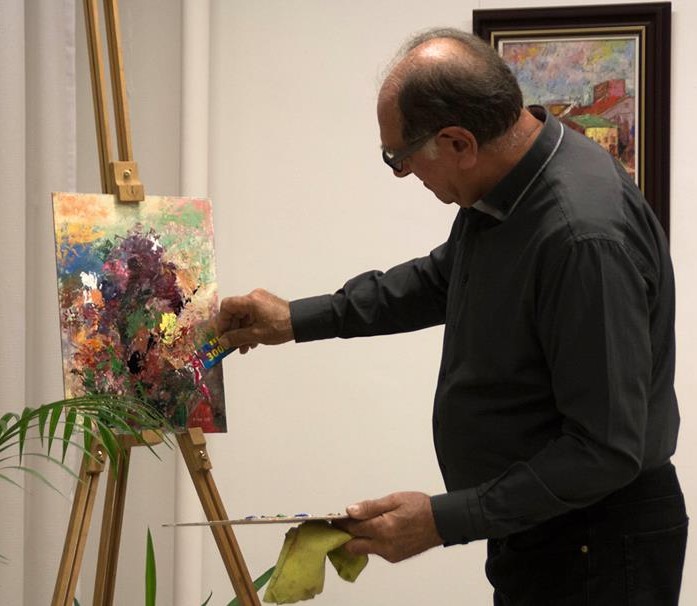
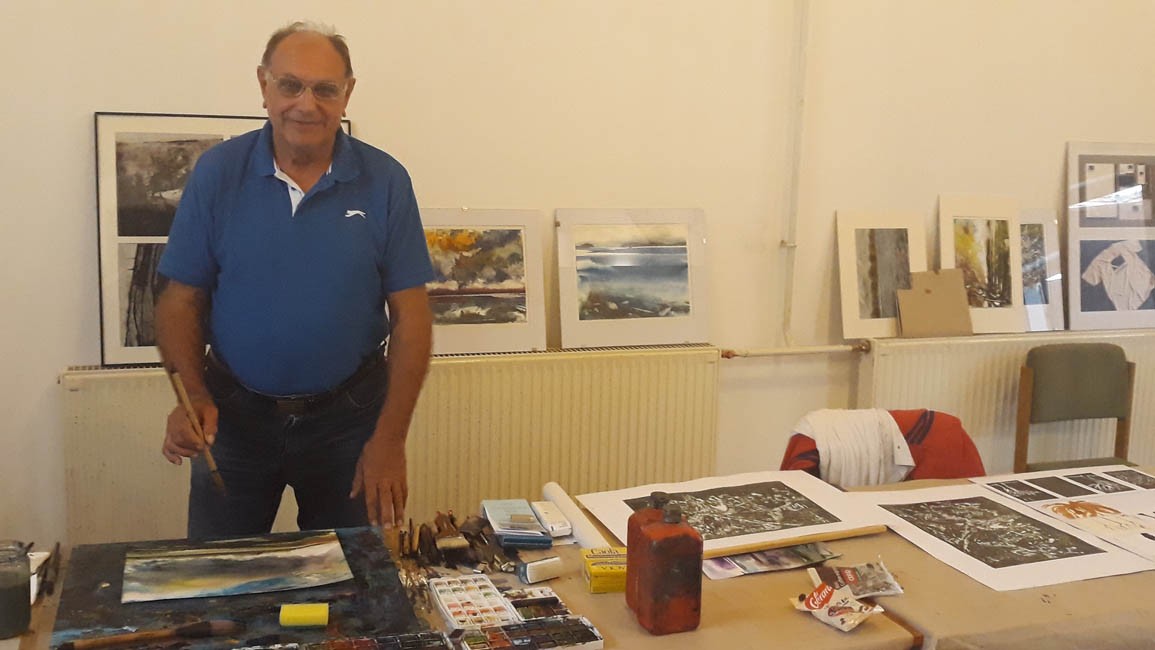
Today, István Orosz is a member of the National Union of Hungarian Painters, he is founder and president of the AKT (Amateur Fine Arts Society).
But he is not only a painter, he is also passionate about graphic and polygraphic art whose love has been bequeathed to him by Béla Szepessy, graphic artist living in Nyíregyháza.
His works have found "home" among Hungarian collectors and foreigners; they are found in various establishments such as cultural centers, private collections of artistic camps or in museums.
Ars poetica
Creation for me is getting close to the essence of surrounding world, the association sought on the surface, the vision creation using the materials at hand.
Living with the chances the materials provide I consciously control their behavior . That’s what poduces the end poduct, the - to the some extent spontaeniously produced - blur , shape. I find drawing skill particulary important, the knowledge accumulated in the fingers must at all time be kept alive Had I had the chance to define the essence of the sorrounding world, I would not ever try to paint it. In István Szőnyi’s words:
“ The closest we get to the essence of nature the further we get from nature itself .”
In my creativ life this is a process in wich I can not jump over steps or obstacles. The ones who shortcut the painful way that leads to knowledge are the ones who bluff in their works.” “ P arts of our environment become the building stones of pictures. They are reduced to colours and shapes. F or me it’s not the what but the how that’s the most important. My credo puts it this way:
“ What is important is not who you are, but who yuo want to become, someone, be someone, this is the aim, and the ones who get there, are the ones’ whose lives have not been wasted.”
By the eyes of the poet
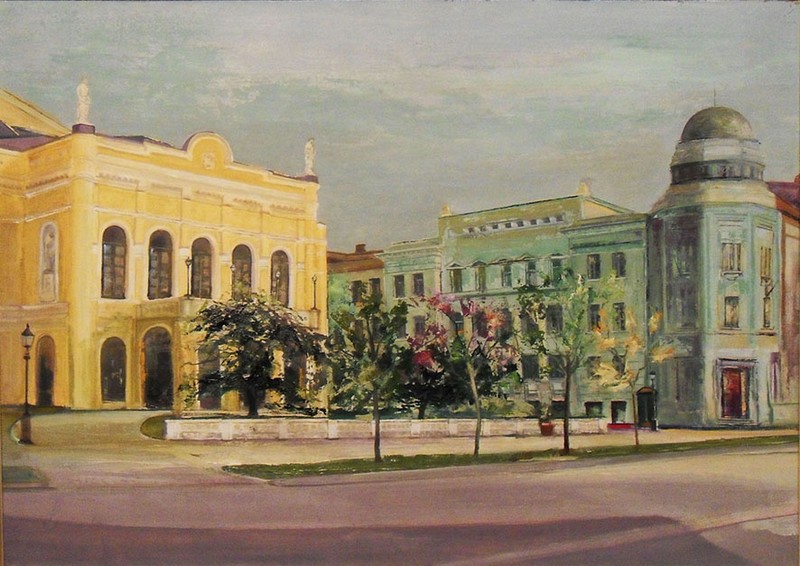
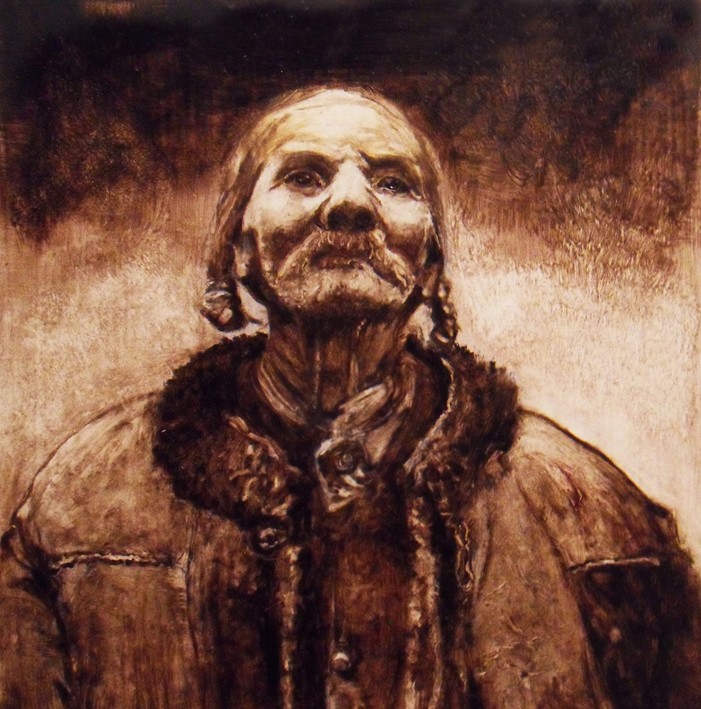
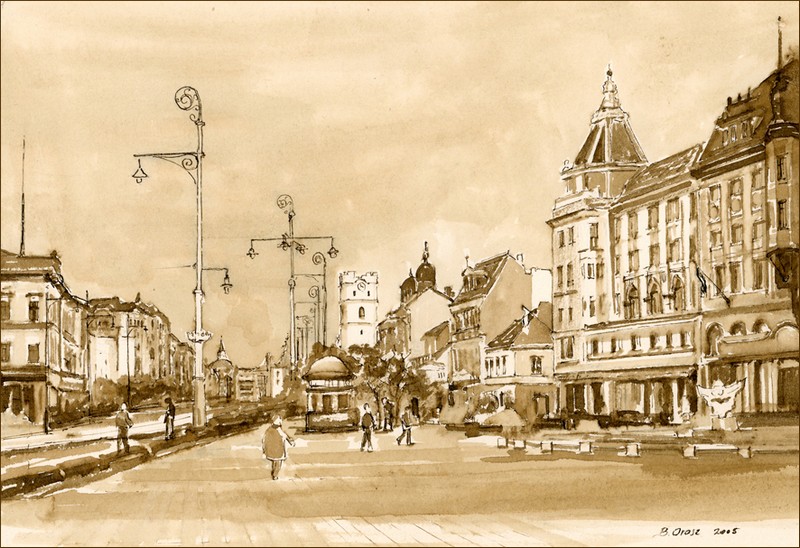
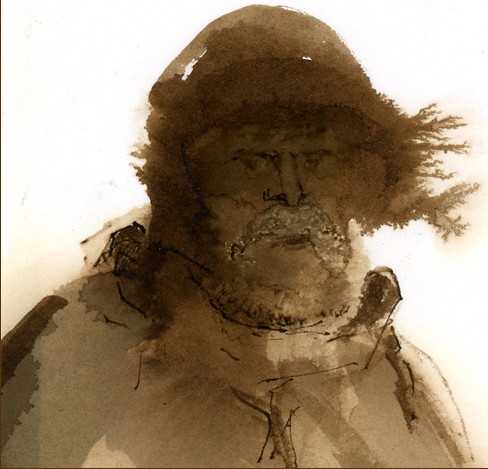
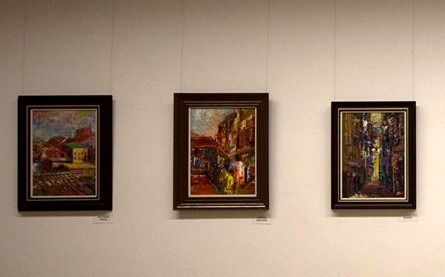
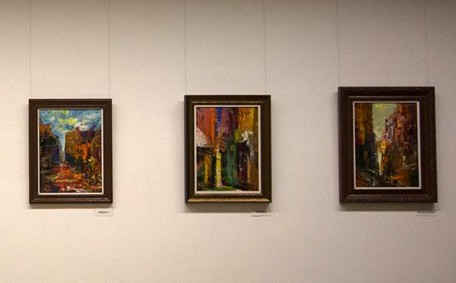
The close-mouthhednes of Orosz István might as well be mystic, as there is some secrecy and association sought in his paintings as well. Although he mainly chooses to present us landscapes, natural and man made environments, the compositions he selects from nature, cities he paints these unique interiors with some unusual texturing and material handling. The presented - let it be drawing or matured paintings - is classically set and is developed into a decoratively colorful composition in this interpretation. In this neologism, is on the adjective earnestly decorative.
He favours warm as well as pastel shades, those that make the vision more attractive despite it’s cold atmosphere, and those that meanwhile open up the dream world that creates another reality right instantly. This imagery of reality - even when reflect upon identifiable reality - is produced out of the mixture of three kinds of realities such as: the actual, the abstract and the experienced realities. The mecina that has been created out of the image and atmosphere of the ever so often low profiled surrealistic, expressive dreams and impressions runs paralell in space with the seemingly unconscious, thought consciuusly controlled, artistically virtual free mecina.
Namely the actual, suppositional and the abstracted, world come alive in his works and these abstractions are soaked with sensitivity and fine lyric. Behind lyricism there hides the prolific emotion of the soul as well as the unique tension of withholding, and in his closed mouthednessone would feel his search for compromise. With the calmnes of visual expressionism ripens the dare, the sadness, the vibrating gestures and the silence. Those to become power and emotion-provoking colors, but often one might have the strange feeling of hearing the sound behind. All of these qualities bring plasticity besides the earlier mentioned decorativity.
One can feel the desire to touch his pieces of art. When presented, he is the master of shaping them so that they seem to be touchable. This is however in the dimensions of soul relationship, that is to filled with content in the area in between the picture and the recipient. The painter often doesn’t want to grab the unusual or the unique. His dreaminess is rather more impressive, mood oriented, than leaning towards surrealism. He is the constant search for simple, everyday qualities. He feels the positively charged emptiness with the delicacy of poetry like spontaneity.
Ferenc Vitéz
poet
"There are untold blushes of dawn
which have not yet arisen." (Rigveda)
Could one ever find a more beautiful thought in the preface of a catalogue that the one cited in the line above? This is the thought that sustains artistic volition and, on the other hand, ever calls visitors to art galleries. This concept gives the reason why the ambitions of various artistic tendencies to erase museums were all in vain - these efforts themselves got into museums instead. In vain was politicians’ hysteria endeavouring to subjugate arts into servitude and in vain is negation at present expressed either in astonishing ideologies which even put self-mutilation on the pedestal of arts or in the activity of certain TV companies which make use of cruel tragedies to appease hunger for information and attend on hunger for spectacle developed by horrors which cannot be enhanced even by action films any more. All is in vain for artists remain artists as well as human beings altogether.
Their imagination, in the most favoured moments, by emotion and sensibility, enables the recipient to live a more affluent and wealthier life for a while in perpetually changing history. Nowadays, however, like all people artists have got to face an acute crisis which arises from the increasingly explosive complexity of our century. Real and political empires have collapsed, war has become manifest in our immediate vicinity, not to speak about delinquency or the daily worries of everyday life. An artist of creative mind has to accept the challenge, make a survey of it and treat it with his fellow-beings - he himself has to undergo a transformation so as to be able to transform and recreate his surroundings and he does not only have to revive himself but also the domain of the process of creation. Such an artist is István B. Orosz.
He does not only join in artistic work as an organizer arranging exhibitions and organizing colonies of painters but he also lives the life of an artist who has to bring about artistic value as against „hamburger and mickey-mouse culture” falling on to us. As Prometheus stole fire for people, painters steale beauty into our lives. Since we need beauty immensely in the dreariness of our days. István B. Orosz derives from his birthplace, his homeland proper, his schools and the generative atmosphere in colonies of artists. From the especially hectic life of the previous decade, it is neither the reflexion of vexation or disintegration nor the slowly aging „novel” reaction of mocking scandalizing or the doctrinal claim to construct something new at any cost that he represents in his art.
Instinctively , he withdraws into an inner world characteristic of his personality and he draws the spectators of his pictures with him as well. This inner world is, first of all, a world of beauty and clarity . His delicate and always clear works of art often full of presentiment hiding secrets and recalling our ancestors’ world into memory suggest harmony , humanism and the existence of real beauty . This inner world is a world of fairness which is primarily expressed in his meaningful interiors.
Where does this world come from?
His paintings make us, the viewers, cast our souls back on our own not-so-long- ago past. Since, perhaps, every one of us cherish memories about a fabulous world of fragrant air about beds built high out of grandmothers’ pillows whipped with care, tablecloths washed and ironed snow-white frothy , draws of chests packed with treasures, chests of drawers pure like tabernacles with the portraitgallery constituted by the fading photographs of the members of the family treasuring secrets or about festive rooms with their peacefulness of devotion inside. Lives, pleasures, sorrows and tragedies hide in the details of his pictures and make us remember our past and ask ourselves whether we did everything that we could and that was worth doing. Can our grandparents still sit down outdoors in the verandah in the afternoon sun? Will our children have the chance to remember the water of the river Tisza - and not only from poems?
That is why the world depicted in these paintings does not yet sound a knell and these works of art cannot only be considered as mere documents. It is not up to the painter. What he creates is an integral part and continuation of the best traditions as far as either the attitude of the artist or the concept of the pieces are concerned. In István B. Orosz’s pictures, besides ancient ruins and Renaissance buildings recalling the past and history , even modern cities represent a pictorial treatment as the artist softens the earsplitting noise of our rushing age into the tranquillity of delicate colours and decaying forms as if , at least in the realm of painting, he ennobled iron, steel and concrete blocks to make worthy companions of the values of the past. In his paintings, even this swarming torrent becomes humanized. It is just natural that, in this pictorial world, nature also gains ground. The seasons of the year with their ethereal or severe beauty , flowers with their gracefulness. Both in his larger and in his smaller pictures, the painter’s fundamental principle is the classical composition and the atmosphere is determined by his decorative, subtly-woven, harmonic colouring. Now we can get acquainted with the works of an artist who respects the mastery of the profession and considers it important to attain full knowledge if it - also expressing his respect to the spectator in this way .
Gábor Lukács
Painter
Kálvinista Róma
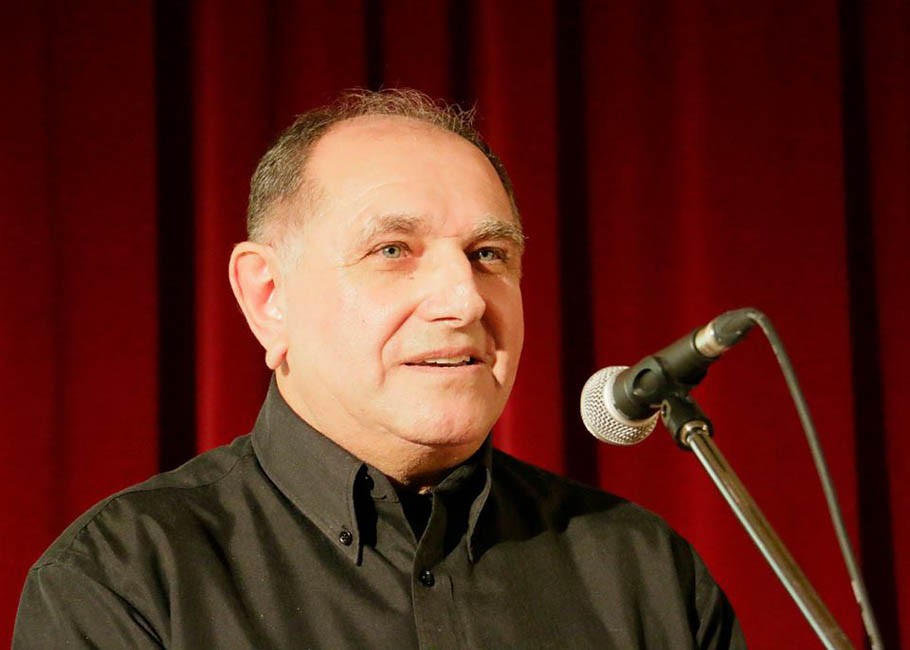
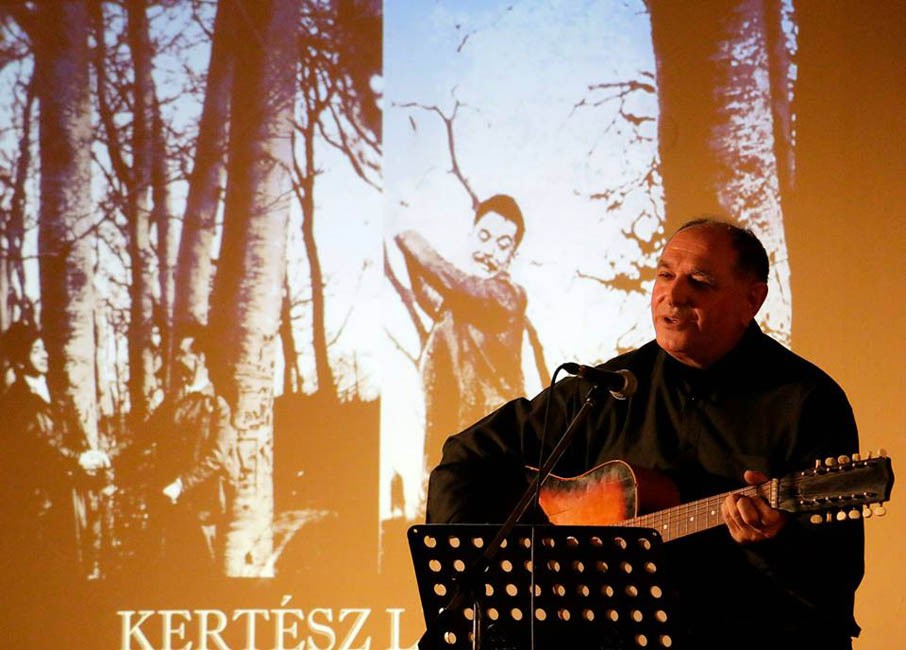
István B. Orosz's first publication is closely linked to art and his place of residence, Debrecen. Calvinist Rome, published in 2009, embodies the outstanding buildings and personalities of the city of Debrecen, past and present, in pictures.
Extract :


Homokba vésett vallomás
His first book of poems was published in 2016: Confession Engraved in Sand. He dedicates his volume to his homeland, the Nyírség. Where the Meadow meets the sand of Nyírség, the two are intertwined with the sustaining roots, the tenacity of the acacia tree, the people of Nyírbogdány clinging to the space of their lives, sometimes trampling in mud, sometimes burning their soles with the hot sand.
Extract :

Lélekhangok
His second collection of poems was published in 2018, titled Soul Sounds. Both collections of poems are decorated with numerous paintings and drawings by the artist.
Extract:


Álomkergető
In 2020, another collection of his poems, Álomkergető, was published. It was presented in October 2020.

Kincskereső
His first collection of short stories, Treasure Hunter, was published in 2020, illustrated with numerous photos and drawings.
Extract :
Történetek két kerékre (Stories on two wheels)
I can say this now, since it is a historical perspective, that in the early seventies of the last century there were only three
cars in our village. Two Skodas and a Trabant. The district doctor, the veterinarian and the agricultural cooperative's president.
The party secretery whose position corresponds to the current clerk, only got a motorcycle, a Java. My brother, who was a deep driller
by profession, worked in the well drilling brigade and earned very well compared to the wages of that time. His dream was also a
motorcycle, a T-5 Pannónia.
This motorcycle had straight handlebars, which he didn't really like and he had a high, curved handlebar made. It was nickel-plated
and no one would have said that it wasn't a factory handlebar. With rearview mirrors on both sides. A crash protection made of a
bent tube at the front, with a transparent plexiglass cover. This was the Harley-Davidson of Nyírség.
The village was amazed, especially the young men looked at him with envy. My brother, however, had a big heart and, down on the
pasture, on the grassy track, to the horror of the cows, he allowed several people to try it. It wouldn't have been nice if I hadn't
been the first to go for a ride. I could sit alone on the custom-made, slimmed-down leatherette seat, which was a very uplifting
feeling after the bike. I couldn't even hear his voice from under the helmet, it was as if I had been flying. On weekends, I felt
honored when I could glide around the yard to a gleam. We even got our share of bad words from our neighbors: "There's no proper
fence around the house, but they need a new motorbike!" - Which was true, because my mother made a fence out of sunflower stalks
every year, which we burned in the spring, as it wasn't that durable. In today's modern terms, I would say that we updated the
fence every year. By the way, the strange vehicle was not new, only the careful hands made it so. The engine did not sleep outside
in the yard, its garage became my brother's small repair shop, where he mostly tinkered with electrical things. He was the unofficial
radio and TV technician of the village and its surroundings. Whatever they could not fix in Gelka, Jóska fixed, but he also went to
houses to bring the devices back to life. Music was everything for him. At that time, the beat era was in full swing and there were
few villages where musical instruments did not rumble in the community center. Every village that was good at something had a beat band.
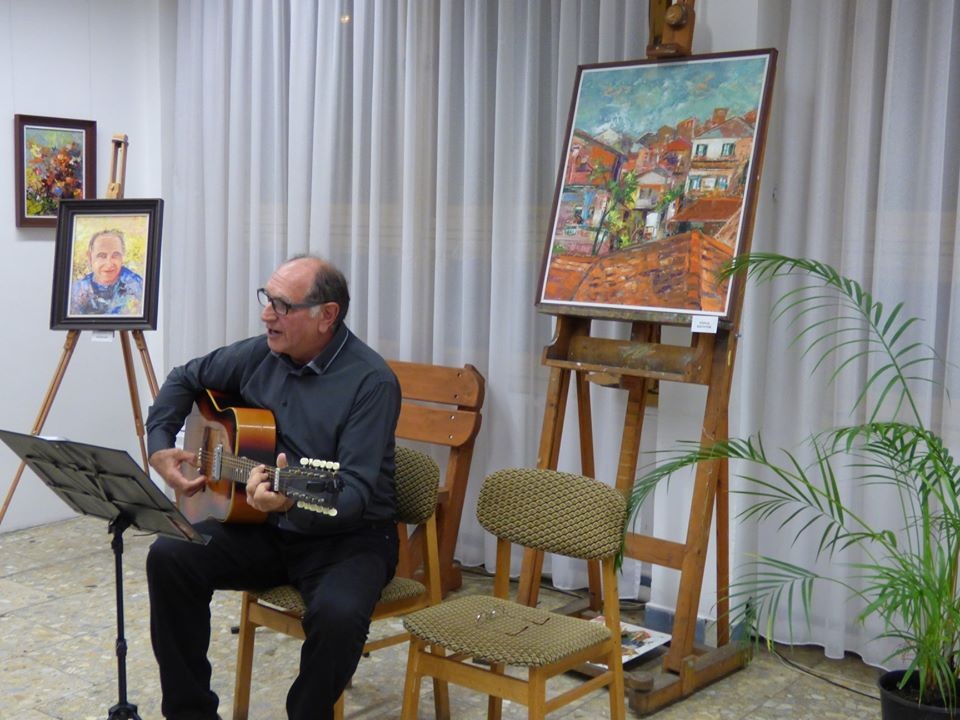
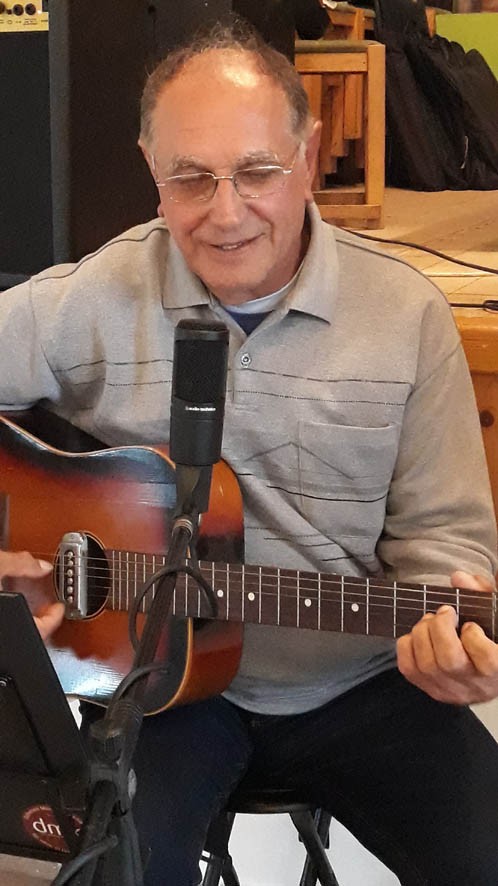
I learned to play the guitar in a self-taught way, so to speak, at the pub level. My brother played the drums. We rehearsed regularly
in the factory culture, and we also made friends and got to know English lyrics. Beatles, Deep Purple lyrics were already going well,
because an old lady who was visiting from Canada, who was not Hungarian and did not speak our language, praised it.
Once she heard us playing and remarked:
— I never thought that the Hungarian language was so similar to English!
We traveled on our amazing motorbikes every time. The road to the station was quite winding. Many times, not respecting the speed
limit on the bends, we fell so much that sometimes it felt like my knees were touching the ground. I was afraid at first, but then
when I felt that I was safe behind my brother, I enjoyed riding my motorbike more and more. I don't know the reason anymore, but my
musical career was cut short, the band broke up.
One summer afternoon we brought the equipment and of course on the motorbike. A complete drum kit, my guitar and two amplifiers.
We attached the bass drum to the rear trunk, the two kettle drums were tied together with a string and hung around my neck,
and there they were slung over my side. I carried my guitar on my back like soldiers carry their weapons. We tied the stands to
the side of the motorcycle, which made it possible to sit on the motorcycle in a rather strange position. The snare drum was
squeezed between the two of us. We looked like a drummer's sandwich while riding. One amplifier was placed on top of the tank, and
the other, which resembled a suitcase and had a small handle on top, I held in my hand.
The phenomenon must have been like a mechanized circus clown, to whom all sorts of musical instruments were hung. The distance
between the factory site and the village is two kilometers, but my brother said that we shouldn't go through the village, because
if the district police saw us, it could be a big problem. And so it happened. We planned to go home through the pasture at the edge
of the village, under the gardens. At the far house, a deep ditch ran between the road and my lane, which had been carefully cleaned
out at the time, and the bottom was cut into a nice square shape. The only way across the ditch was a small, narrow wooden passageway,
not a bridge, which could not have been a meter wide. The stone railing next to the road ended at the edge of the descent.
We slowly turned onto the passageway, but the tom-tom drum on my left side touched the stone railing and knocked us off balance.
The motorcycle was already in a downward swing, my brother tried to correct it, but in vain. I managed to land in the ditch, almost
brushing the edge of the small passageway. The front wheel got stuck in the nice square ditch. Since I had such momentum, I, like a
stuntman, landed on the far bank above my brother's head. With such presence of mind that while falling, I managed to put the amplifier
in my hand on the lawn, like when you come home from a trip and put down your suitcase. This was done so precisely that it remained
standing. My brother was able to hold on to the steering wheel very tightly when he reached the ditch, because the wonderfully shiny
steering wheel, with the two mirrors, remained in his hand. Both of the fastening lugs broke.
Apart from that, no damage was done to either us or our equipment. Nevertheless, the crossing attempt was a sound. The cymbals rolled
away with a clang, accompanied by the sound of drums, the end could be compared to a real orchestral battle. It was also very lucky
that no one saw us. The village did not take the funny incident seriously. After a few hours of waiting, since the cooperative machine
shop was about a kilometer away, and they welded it there with relative speed, we arrived home with a considerable delay, but
fortunately. The strange-looking vehicle was also admired by the authorities once, when my brother Jóska and I went to the Hortobágy
bridge fair. A firm police signal forced us to stop in front of Nyíregyháza. The policeman didn’t even ask for the documents, he just
looked at the strange structure. But when we saw the uncertainty in him, he still wanted to look at the documents. After a long review,
he said:
— According to your papers, this should be a T-5 Pannónia, but it’s not! Do you know that unauthorized modification is a
punishable act? – he said with superior firmness to my brother, who didn’t hesitate and replied:
— This is similar to the appearance of the P-10 motorcycles that are currently being produced. The steering wheel, the seat,
were made with a new design. Only a few of these were produced as an experiment to scare the Japanese manufacturers at the
international motorcycle exhibition that took place in Budapest last year. I bought this sample. The sergeant, who was alone, was a
little unsure, and his determined action turned into interest. He walked around it once more, praising it, because it was still a
masterpiece of Hungarian industry. A few questions were asked, such as how much fuel it consumed, how many cubic centimeters of
engine it had. But when my brother announced the engine's performance in horsepower, he seemed a little confused by what he had
heard and now he resolutely returned the documents. He praised his intelligence for wishing us a safe and accident-free trip.
In fact, there had never been a motorcycle exhibition like this in the capital. Arriving at the famous venue of Hajdúság, Hortobágy,
I was quite surprised, because I had never seen so many people in one place. All those tents, all kinds of vendors. You could buy
everything "from needles to rockets".
My brother was looking in front of a tent selling shoes. He had always wanted a pair of black pointed-toe flats with a slightly
raised heel. And lo and behold, there was a whole row of them. After the test, he didn't even take them off his feet, it suited
the strange vehicle, which the fairgoers also admired. The weather was quite gloomy, and we suspected that we would get caught in
the rain on the way home. We bought the then fashionable hurricane jacket from a vendor, which we really needed on the way.
It rained almost the whole time. But the raincoat didn't protect anything below the knees, and our feet, along with the new shoes,
were really wet. When we got home, it didn't rain anymore. My brother tried very hard to get the motorcycle to start, which
required a firm pedaling motion.
As a result of the forceful movement, the high heel of the brand new black patent leather shoes simply fell off. It started to tear
at the shoelace on the other foot. Then the other heel also came off the sole. It soon turned out that the long-coveted footwear was
made of cardboard, and it was even more annoying that it wasn't a cheap bargain. But the engine worked flawlessly the whole time
and at least they could admire the Harley-Davidson from Nyírség in Hajdúság.